
The Election Commission reports a significant reduction in West Bengal's electoral rolls following a Special Intensive Revision, with nearly 9.1 million voters deleted.

The Election Commission of India has introduced a mandatory declaration for new voters, requiring them to provide parental details from the Special Intensive Revision (SIR) exercise. This move, aimed at streamlining voter mapping, has sparked controversy, with some Election Commissioners deeming it "illegal" and "unauthorised" due to potential negative impacts on young voters.

West Bengal Chief Minister Mamata Banerjee has urged voters to 'take revenge' for the deletion of names from electoral rolls, alleging the BJP is behind the changes. She also addressed concerns about EVM tampering and the deployment of officers to other states.

Three BJP allies, including LJP (Ram Vilas), TDP, and RLM, have called on the Election Commission for a clearer explanation regarding concerns raised by two Election Commissioners over the voter list revision process. Union Minister Chirag Paswan warned that public faith in elections was at stake, while the EC asserted that differing views among its members were normal and final decisions were unanimous.

Chief Election Commissioner Gyanesh Kumar is facing significant scrutiny after an investigation revealed objections from his fellow election commissioners, Sukhbir Singh Sandhu and Vivek Joshi, regarding decisions made during the Special Intensive Revision of voter lists. The objections, reportedly made at least 14 times, concerned issues like changes to voter registration forms and centralised control over electoral roll databases, intensifying criticism of Kumar's tenure and the EC's impartiality.
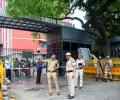
The article details a history of internal disagreements among Election Commissioners in India, highlighting instances from 1993 to the present, including clashes between CECs and commissioners over various issues like removal recommendations, dissent notes, and affidavits, culminating in recent objections regarding voter list revisions.
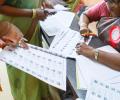
Former RBI Governor Bimal Jalan, ex-IAF Chief NAK Browne, and other prominent figures in Delhi have received notices regarding discrepancies in their voter details during the ongoing Special Summary Revision (SIR) of the electoral rolls. Over 33 lakh electors have been identified for such notices, with a deadline of September 30 for responses.
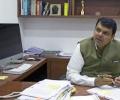
Maharashtra Chief Minister Devendra Fadnavis has accused the TMC of conspiring to include infiltrators in electoral rolls, claiming the party objects to the Special Intensive Revision (SIR) while those rightfully removed from the rolls did not protest.

The Election Commission of India has revised instructions for the Special Intensive Revision of voter rolls, allowing voters served notices for "No Mapping" or "Logical Discrepancy" categories to avoid physical appearance. Booth Level Officers will collect documents at residences, and submissions can also be made via WhatsApp or during special camps, ensuring a more accessible process for electors.
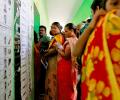
Opposition parties in India, led by the Congress, have demanded a detailed discussion in Parliament on alleged discrepancies in voter lists. Rahul Gandhi raised the issue in the Lok Sabha, highlighting concerns about the integrity of the electoral process. The opposition alleges large-scale duplication of EPIC numbers, which they claim undermines voter integrity and the electoral process. They have also pointed out instances of inflated voter lists in states like Maharashtra and Haryana. The Election Commission has acknowledged discrepancies but maintains that these are not widespread and that corrective measures are being taken. The opposition, however, insists on a comprehensive discussion on the matter to ensure the integrity of elections in India.

'If you ask Prime Minister Modi prove you are Indian, as per the Election Commission's criteria, he may not be able to prove that he is an Indian.'

The Bombay High Court in Goa ruled that provisions of the Representation of the People Act and Registration of Electors Rules remain in force during a Special Intensive Revision of electoral rolls. The court directed authorities to include six members of a Goa family in the voter list, criticising the Election Commission's system for rejecting Form 8 applications for residence change, stating it denied citizens their right to vote and amounted to suspending legal provisions.
Bengaluru's electorate has significantly decreased by 43.13% to 59.08 lakh after the Special Intensive Revision (SIR) process and the publication of the final electoral roll on October 27. This reduction is largely due to deletions under the ASDDO category (Absent, Shifted, Dead, Duplicate, Others), with Bengaluru South and Mahadevapura seeing the highest number of removals. Despite the deletions, the Chief Electoral Officer assured that no eligible voter was removed and the process was transparent.

Opposition leaders from CPI-M and AAP faced detention in Delhi and Chandigarh while protesting against Chief Election Commissioner Gyanesh Kumar over serious allegations of voter-list manipulation and suppression of democratic rights.

The Election Commission of India (ECI) has announced a revised schedule for the Special Intensive Revision of Maharashtra's electoral roll, pushing the final publication date to November 16, 2026. The period for filing claims and objections has also been extended.

Uttarakhand's final electoral roll, released after the Special Intensive Revision, shows a significant reduction of approximately 8 lakh voters compared to the start of the process, with the total now standing at 71.58 lakh. The opposition Congress, however, claims the decline is much steeper, citing a 14 lakh reduction from an earlier figure. The Chief Electoral Officer's office detailed the revision process, including additions and removals, and outlined ongoing efforts to ensure all eligible citizens are included.
The Election Commission is set to begin training poll officers in West Bengal for the special intensive revision (SIR) of electoral rolls, ahead of the upcoming assembly polls. The training aims to equip officers to guide booth-level officers (BLOs) in ensuring a smooth and accurate voter list revision process.

Goa Forward Party chief Vijai Sardesai has alleged that Nepalese nationals were added to the state's electoral rolls during the Special Intensive Revision (SIR) and that voters were illegally shifted between constituencies. He has demanded an impartial investigation into these alleged irregularities, calling for deletion of illegal entries and action against those responsible.

The Election Commission has provided a fresh opportunity for voters in seven states marked as Absent, Shifted, Dead, or Duplicate (ASDD) to be included in the final electoral rolls. This decision comes amidst allegations of disenfranchisement and aims to facilitate the inclusion of electors whose enumeration forms were not returned during the Special Intensive Revision exercise.

The Special Intensive Revision of Maharashtra's electoral rolls has identified over 76 lakh voters classified as permanently shifted across the state. Mumbai Suburban, Thane, and Pune districts reported the highest numbers, highlighting significant discrepancies in voter lists and the ongoing challenge of maintaining accurate electoral data.

The Supreme Court has expressed concern to the Election Commission regarding the "almost mechanical" issuance of notices under the Special Intensive Revision (SIR) exercise in Delhi, urging additional safeguards and clarification on "logical discrepancy" criteria. The court is hearing a petition challenging the EC's process, which has seen millions of voters receive notices, raising practical difficulties and concerns about potential disenfranchisement.
The Supreme Court will hear a plea on October 28 regarding the Special Intensive Revision (SIR) of Delhi's electoral roll. Petitioners seek transparency from the Election Commission on voter deletion reasons and a simplified re-inclusion process for those omitted, especially concerning Form 6. The court had previously raised concerns about "mechanical" notice issuance during the SIR, which led to 47 lakh voter deletions in Delhi.

The Delhi Chief Electoral Officer's office has issued notices to over 33 lakh voters, including former deputy prime minister LK Advani, External Affairs Minister S Jaishankar, and former vice-president Jagdeep Dhankhar, over discrepancies in their electoral roll details. These notices are part of the Special Intensive Revision (SIR) exercise, primarily due to details not matching with the 2002 SIR. Despite concerns raised by some politicians, officials assure that no names will be deleted without due verification and an opportunity for voters to respond.

The West Bengal government has filed FIRs against five state government employees for alleged lapses in electoral roll revisions, following an Election Commission ultimatum. The action comes after the EC directed the state to initiate criminal cases against the accused for adding fictitious names to voter lists.

India's Election Commission's centralised voter database systems, ERONET and ECINet, are under scrutiny following concerns raised by Election Commissioners Sukhbir Singh Sandhu and Vivek Joshi regarding the centralisation of electoral rolls and control available to state election officials. The article explains how these systems work and why they are currently in the news.

Jantar Mantar in New Delhi was heavily fortified with multi-layered barricades and thousands of security personnel on Saturday in anticipation of a protest by the Cockroach Janta Party (CJP). The protest targeted Chief Election Commissioner Gyanesh Kumar over allegations of voter-list tampering and bypassing colleagues to alter voter registration forms.

Three leaders of the Cockroach Janta Party (CJP), Abhijeet Dipke, Saurav Das, and Ashutosh Ranka, were detained by Delhi Police upon landing in the national capital from Mumbai, preventing their planned protest at Jantar Mantar against Chief Election Commissioner Gyanesh Kumar.

A political storm has erupted with the Opposition demanding the removal of Chief Election Commissioner Gyanesh Kumar, following reports that two Election Commissioners raised 'expansive red flags' over the Special Intensive Revision of voters' lists, citing issues like name deletions and decisions made without their knowledge.

The Supreme Court has instructed the Election Commission to probe allegations of irregularities, specifically concerning bulk Form 7 applications, during the special intensive revision of electoral rolls in Uttar Pradesh. The court's directive came after petitioners raised concerns about the deletion of voters' names, with the EC acknowledging bulk submissions but stating they were not acted upon due to being false.
Delhi's draft electoral roll has been published, showing 47.7 lakh voters excluded. Those omitted can file claims until September 30, with the final roll due on November 4. The exclusion follows a Special Intensive Revision exercise where many electors were categorised as "uncollectable."
Sex workers in Sonagachi, Asia's largest red-light district, are pleading for relief from stringent voter ID rules that they say are impossible to meet, potentially leading to exclusion from the voters' list.

The Supreme Court has directed the Election Commission to devise a mechanism to reach out to approximately 47 lakh Delhi voters whose names were struck out from the draft electoral rolls during the ongoing Special Summary Revision (SIR). The court emphasised that the right to vote is vital and cannot be forfeited due to absence, questioning the EC's requirement for previously enrolled voters to file Form 6 for re-inclusion and suggesting alternative methods like publishing lists and accepting late enumeration forms.

Mumbai police detained 400 individuals, including Tushar Gandhi, for protesting without permission.

Around 200 people, including Tushar Gandhi's organisation members and CPI(M) supporters, were detained in Mumbai for protesting.

The Railway Board cancelled certain Mail and Express trains arriving at New Delhi and Hazrat Nizamuddin stations on October 10 due to expected road traffic from a planned protest. The Cockroach Janata Party announced a protest at Jantar Mantar on Saturday, demanding the resignation of Chief Election Commissioner Gyanesh Kumar over alleged irregularities in electoral rolls. Delhi police requested the closure of 57 metro stations to prevent protesters from reaching the site.
The Chief Electoral Officer of Uttar Pradesh has strongly denied media reports alleging irregularities in the addition of 16.18 lakh voters during the Special Intensive Revision (SIR). The CEO asserted that the process was conducted with "utmost transparency" and in strict adherence to electoral laws and ECI instructions, clarifying the collection and processing of Form-6 applications.

Election Commissioners Sukhbir Singh Sandhu and Vivek Joshi reportedly flagged multiple issues during the Special Intensive Revision (SIR) of voter rolls, including name deletions. Despite a media report suggesting 14 objections over 10 months, Election Commission officials assert that all decisions, including SIR, were unanimous and approved by all commissioners. The report also highlights opposition parties' criticism of the SIR, alleging it targets non-BJP aligned voters.
'Even today illegal foreign immigrants live in Assam and their names might be on the voters list. This we can get rid of only by doing SIR.'

The Delhi Police has denied permission for a planned protest against Chief Election Commissioner Gyanesh Kumar at Jantar Mantar on October 10, citing late application and previous rule violations, with Section 163 of the Bharatiya Nagarik Suraksha Sanhita (BNSS) now in force in the New Delhi district.

A group of 124 former IAS, IFS, IPS, and allied services officers have issued an open letter defending the Election Commission (EC) and the Special Intensive Revision (SIR) process. They argue that the electoral system cannot be deemed rigged only when a party loses, citing instances where the ruling BJP lost elections under the same EC. The officers highlight the legitimacy and necessity of the SIR for cleaning voter rolls and underscore the robust safeguards within India's electoral system.
